
Cryptids of the Olympic Peninsula: Monsters, Legends, and Local Lore
The Olympic Peninsula is known for many things: ancient rainforests, glacier-capped mountains, wild coastlines, and some of the most breathtaking wilderness in the country. But if you look a little closer… beyond the trailheads and tide pools… you will find that the peninsula has another side to it entirely. A stranger, murkier, altogether more mysterious side.
The Olympic Peninsula has its very own collection of cryptids, legendary creatures and local legends that have haunted the imaginations of residents and visitors for generations. Whether you are a true believer or just love a good story, here is a look at some of the most fascinating creatures said to lurk in the waters, forests, and mountains of the Olympic Peninsula.
Ediz Gigantus: Port Angeles' Very Own Sea Serpent!
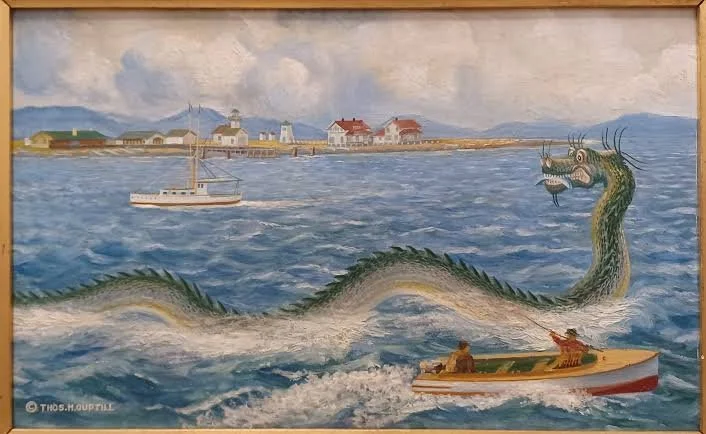
No conversation about Olympic Peninsula cryptids is complete without talking about Eddie. (Eddie? Who’s that?)
Photo Credit/Source: North Olympic History Center
Ediz Gigantus, affectionately known as Eddie, is Port Angeles' legendary sea serpent, said to patrol the waters around Ediz Hook where the harbor meets the Strait of Juan de Fuca. The creature is typically described as a large, dark green serpent with a row of rounded growths running along its back, glowing yellow-green eyes, a horse-like snout, and an enormous appetite for salmon.
The origin of Eddie's legend is delightfully Port Angeles. Back in 1934, the Port Angeles Salmon Club held what was called the Ananias Derby, a fishing contest that rewarded participants not for the biggest catch, but for the most outrageously tall tale. A local fisherman named Charles Lewis submitted a story about a massive green sea serpent that stole his hooked salmon near Ediz Hook, then towed his boat out into the Strait before disappearing into the mouth of a whale along with a team of oversized flying fish.
The story was invented for the contest. But the monster took on a life of its own.
Local artist Thomas Guptill later illustrated Eddie in paintings and postcards that gave the creature a recognizable, permanent look. From there, the legend grew. Eddie became a beloved piece of Port Angeles history, embraced by the community and celebrated as a piece of local identity. The North Olympic History Center has even adopted Eddie as a mascot of sorts.
Today, Eddie lives on in local lore as Port Angeles' most famous resident who has never officially been seen. Keep your eyes on the water near Ediz Hook and watch for what might look like a row of floating debris or bobbing fishing buoys moving just a little too purposefully for comfort.
“That marvelous sea serpent has been seen again. This time it was by Mr. B. Stowe,
just off Cape Flattery. He represents that he “disported in the water more than fifteen
minutes, to invite inspection of its prodigious size and rare ugliness, throwing his long
tapering body ninety feet out of the water, disclosing wings that put our mainsail in the
shade. He then gave two terrific snorts, blowing salt spray all over the vessel and
completely drenching the second mate, then quietly sank into the sea and no more was
seen of his barnacled majesty.”
Bigfoot on the Olympic Peninsula
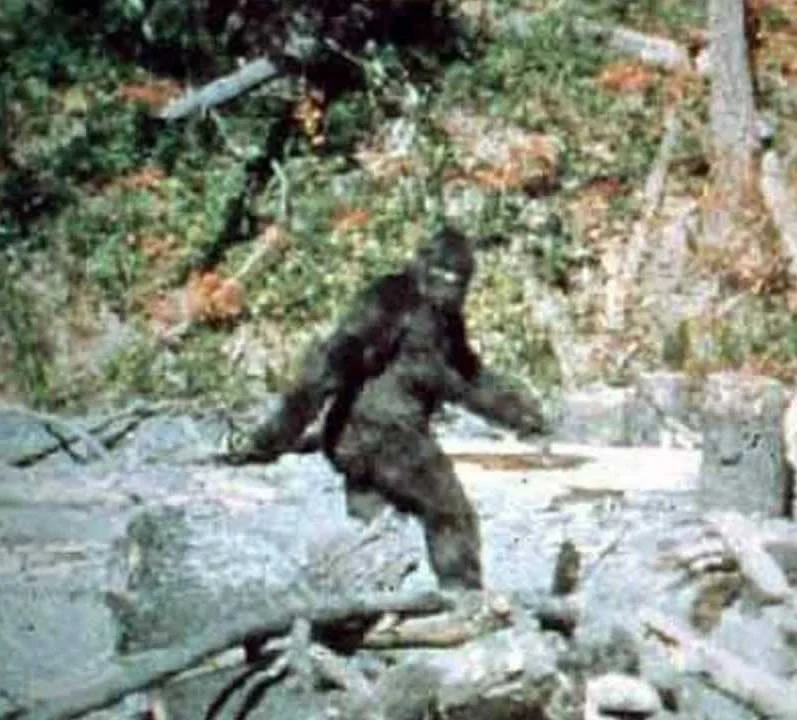
You cannot talk about Pacific Northwest cryptids without acknowledging the most famous one of all: Bigfoot, also known as Sasquatch, has a long and well-documented history of reported sightings across Washington State, and the Olympic Peninsula is no exception.
The dense, old growth forests of Olympic National Park are exactly the kind of terrain where a large, elusive creature could theoretically go undetected for a very long time. The rainforest on the western side of the peninsula, particularly around the Hoh River Valley and the Sol Duc area, receives some of the highest annual rainfall in the contiguous United States and is filled with towering spruce, western red cedar, and Douglas fir so thick that sunlight barely reaches the forest floor. If Bigfoot is anywhere, the Olympic Peninsula feels like a reasonable guess.
Reports from the peninsula over the years have described large bipedal figures spotted near trailheads, creek beds, and remote wilderness areas. Whether you believe in Sasquatch or not, there is something undeniably atmospheric about hiking through the Hoh Rain Forest at dusk and wondering what might be watching from the trees.
The Cadborosaurus: Cousin of Eddie?
While Eddie calls Port Angeles home, the broader Salish Sea region has its own famous sea serpent legend: the Cadborosaurus, affectionately known as Caddy. Said to inhabit the waters of the Salish Sea stretching from Puget Sound up through British Columbia, Caddy is described as a long, serpentine creature with a horse-like head and a body that undulates through the water in vertical waves.
Given that the Strait of Juan de Fuca connects Port Angeles directly to the broader Salish Sea, it is entirely possible that Eddie and Caddy are neighbors, or perhaps even distant relatives. Some researchers who take these legends seriously have noted that Eddie's cooperative hunting behavior and Caddy's generally solitary nature would make them distinct enough to count as separate creatures.
Either way, the waters off Port Angeles sit right in the heart of Salish Sea serpent territory.
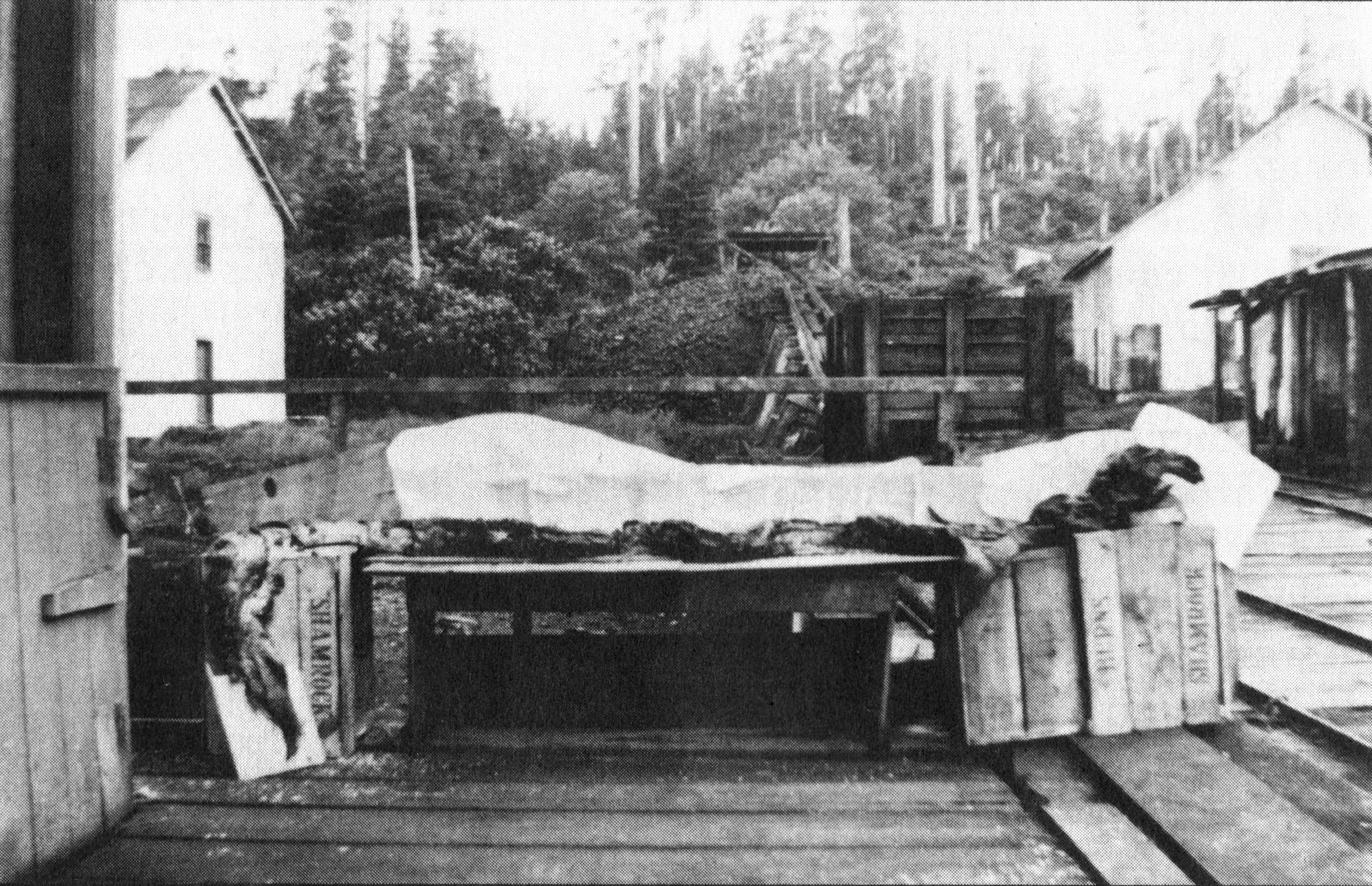
Photo Source: Wikiepedia (https://en.wikipedia.org/wiki/Cadborosaurus)
The Wild Side of Olympic National Park
Beyond named cryptids, the Olympic Peninsula has a long tradition of strange sightings and unexplained encounters in the wilderness. The sheer size and remoteness of Olympic National Park, nearly a million acres of roadless wilderness, means that vast stretches of forest and coastline remain largely undisturbed and rarely visited.
Locals and hikers over the years have reported unusual sounds in the forest at night, unexplained tracks near backcountry campsites, and sightings of large dark shapes moving through the underbrush at the edges of meadows and clearings near Hurricane Ridge and the Elwha Valley.
Whether these encounters have a perfectly rational explanation or something more mysterious, the Olympic Peninsula has always felt like a place where the boundary between the known and the unknown gets a little blurry.
Embracing the Legend
One of the things that makes Port Angeles such a special and unique destination is its willingness to embrace the strange and the wonderful. Eddie the sea serpent is not just a campfire story here. He is part of the community's identity, a reminder that even in a town with mountains at its back and the sea at its feet, there is still room for a little mystery.
So the next time you are walking along the waterfront, keep an eye on the water near Ediz Hook. And if you spot what looks like a row of dark bumps moving just below the surface of the Strait, well, you might want to hold onto your fishing line.
Eddie has been known to steal a good catch.


The North Olympic History Center is dedicated to preserving and sharing the cultural heritage of the North Olympic Peninsula.
For more than 75 years, the organization has collected and cared for photographs, documents, artifacts, oral histories, and other pieces of local history, while making these stories accessible through exhibits, research, educational programs, and digital resources. At its heart, the North Olympic History Center is about connecting the past with the present and helping the community understand the stories that shaped the place we call home.